Unveiling Lost-Wax Casting in Prehistoric and Viking Art
Explore the intricate process of lost-wax casting, a technique that shaped many Viking artifacts, revealing craftsmanship secrets and material authenticity.
Andrew Smith
5/8/20242 min read
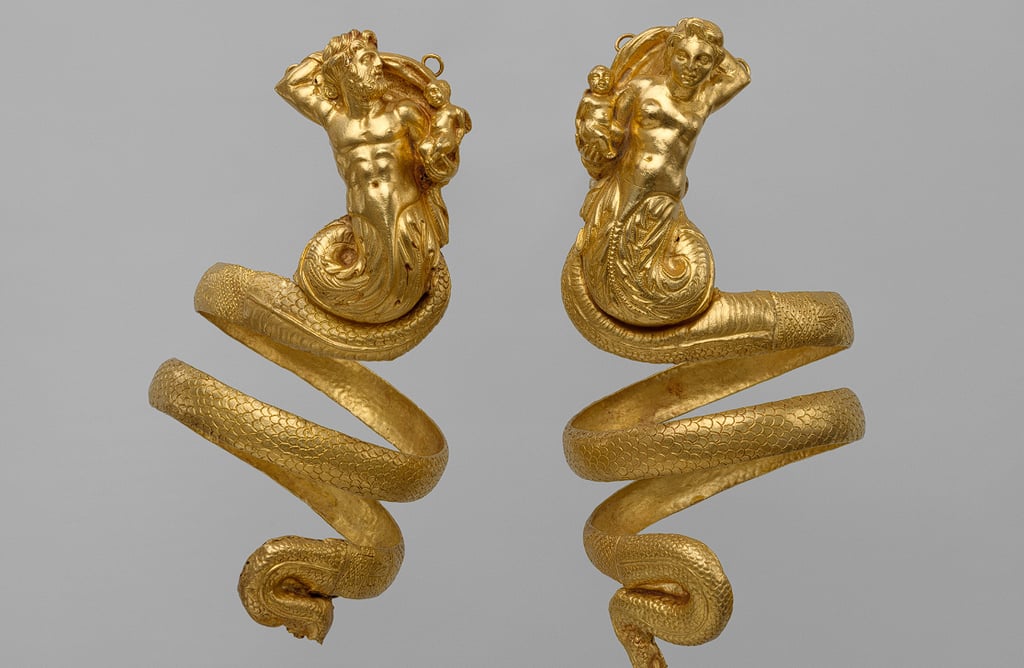
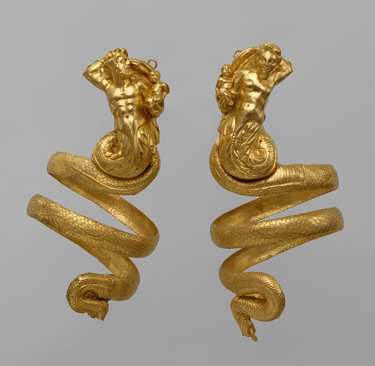
200 BC, Hellenistic Armbands, MET
Introduction
Lost-wax casting, also known as cire perdue, is one of the oldest metal-forming techniques used in human history. It was employed long before the Viking Age and continued through Celtic, Slavic, and medieval cultures, particularly for small objects requiring precision, symbolism, and complex form.
This article explains how lost-wax casting worked historically, what archaeological evidence tells us, and how authentic practice differs from modern industrial imitation.
What Is Lost-Wax Casting?
Lost-wax casting is a process in which an object is first formed in wax, then encased in a heat-resistant material. When heated, the wax melts and escapes, leaving a hollow cavity into which molten metal is poured. Once cooled, the mold is broken to reveal the cast object.
Historically, each cast was unique, as the mold could not be reused.
Historical Use Across Cultures
Archaeological evidence confirms the use of lost-wax casting in:
Bronze Age Europe
Celtic metalwork
Viking Age jewelry and ritual objects
Early Slavic adornments
Medieval ecclesiastical and decorative objects
This method was especially suited to:
small symbolic items
detailed surface work
organic and asymmetrical forms
Step-by-Step: Historical Process
1. Wax Model Creation
The artisan sculpted the object directly in beeswax or plant-based wax. Tool marks were often preserved in the final cast.
2. Sprues and Vents
Wax channels were added to allow molten metal to flow and gases to escape — a critical step for successful casting.
3. Investment (Mold Formation)
The wax model was encased in clay, ash, sand, or organic temper mixtures, depending on region and period.
4. Burnout
The mold was heated so the wax melted and drained out, leaving a negative cavity.
5. Casting
Molten metal (bronze, silver, gold, or copper alloys) was poured into the mold.
6. Breaking the Mold
Once cooled, the mold was destroyed. This ensured one object per mold, a defining feature of historical lost-wax casting.
Materials Used Historically
Wax: beeswax or natural wax mixtures
Metals: bronze, silver, gold, copper alloys
Molds: clay mixed with sand, ash, or organic fibers
No silicone, rubber, or reusable molds were used historically.
Surface Finish and Imperfections
Authentic lost-wax cast objects often show:
slight asymmetry
tool marks
surface texture
irregular thickness
These are not defects, but evidence of handcraft.
Perfect symmetry and mirror finishes usually indicate modern industrial reproduction.
Archaeological Evidence
Fragments of molds, sprues, miscasts, and unfinished pieces have been found in settlement layers, workshop areas, and burial contexts across Europe. These finds confirm lost-wax casting as a workshop-level technique, not mass production.
Many objects show signs of minimal finishing, suggesting efficiency and symbolic function were often valued over perfection.
Lost-Wax Casting vs Modern Reproduction
Historical PracticeModern Industrial CastingOne mold per objectReusable moldsHand-modeled wax3D or machine-made mastersNatural materialsSynthetic investmentsIrregular surfacesUniform finishes
Understanding this difference is essential for evaluating authenticity.
Why Lost-Wax Casting Matters Today
Lost-wax casting connects modern viewers directly to historical decision-making, limitations, and material understanding. It reflects how artisans balanced symbolism, labor, and available technology.
When practiced authentically, it remains one of the most honest ways to recreate historical metal objects.
Conclusion
Lost-wax casting was not a decorative trick, but a practical, flexible, and deeply human technique. Its traces remain visible in archaeological finds and surviving objects, offering insight into how historical craftspeople thought, worked, and solved problems.
Understanding this process is essential for anyone interested in historical craftsmanship, artifact study, or material authenticity.
Suggested internal links:
Link Historical Techniques → this article: One of the most important historical metalworking methods documented across Europe is lost-wax casting, used for producing detailed and symbolic objects.
Link from Start Here → this article
Later link from Authenticity Guides (casting accuracy)